All video posts

Freelancing · Sales · Entrepreneurship

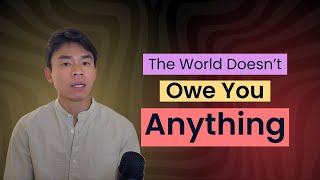
Stop Selling What You Do: Sell Outcomes, Not Skills

If you struggle to grow a service business, or deals seem to arrive by luck, you are probably selling skills. Skills are commodities. Clients do not buy what you do; they buy the painful problem you make go away. Here is how I think about repositioning from skills to outcomes.

Deric YeeDeric Yee 16 November 2026 6 min read 8 min video

Prefer to read? The full article is below. Watch on YouTube.

The short version

  1. 1"I do web design" is a commodity statement. Clients pick commodities by proximity, speed of reply and price.
  2. 2A solution fixes a specific painful problem for a specific group of people. Sell the result first, the how second.
  3. 3Outcomes let you sell to strangers through outbound, instead of waiting for the next referral.
  4. 4Solving a problem few others can solve makes you hard to replace, even in a small niche.
  5. 5Mostly this is a messaging change, and it works best with people you genuinely understand.

Skills are apples in a supermarket

I think of skills as tools, like apples in a supermarket. There are loads of them, and they are mostly judged on price. Graphic design, web development, digital marketing: if you say "I do web design", that is a level-one statement. My immediate question is: how is that different from the thousands of other people who also sell web development?

Whatever your answer to that question is, that is what you should be pitching. Because clients buy commodity skills the way you buy ingredients, only when they need them. They pick based on proximity, timing (whoever replies fastest) and who offers the best price. If you are expensive, they find someone else. You do not want to be in that position.

This matters for developers too. Plenty of people learning to code want to earn side income through freelancing, and the ones who describe themselves only as "a React developer" end up competing on price with everyone else.

“Skills are commodities. Solutions make you irreplaceable.”

Deric Yee, in the video

What a solution actually is

A solution is something that fixes a specific painful problem for a specific group of people. "I help gym owners increase sign-ups with better-converting landing pages" is a solution. "I do landing pages" is a skill.

With a solution you sell the dream first, then the how. Hook them on the result, then explain what you do. If you have a special method, great, but the client mostly cares about the outcome. If you can get them a thousand leads for a sensible monthly spend, they will not interrogate your strategy. As long as the results arrive, they are happy. That is what people are actually buying.

It is even stronger when you stack a guarantee on top: if I do not get you this result, you get your money back. Now you stand out from everyone else who says "I help you get leads". Everyone gets leads. The difference is how you craft the offer.

Outcomes let you sell to strangers

Selling skills usually relies on chance: connections, referrals, friends of friends. Selling solutions lets you go outbound and say, "You have this problem. Let me solve it for you." That brings in strangers, not just people who already know you.

I think that is the only sustainable way to build a business. Running on referrals feels fine until the tap switches off. I know people whose businesses wait for the next referral, and if none arrives for a few months, they are in real trouble. If all you say is "I do web design", the deal goes to whoever is the client's friend. And how many friends do you have?

When I started my software development agency, and later Sigmaschool, I deliberately did not sell to my friends. Partly because the product was not fully ready and I did not want to disappoint them, but mainly because a business where people buy because they like you does not scale. I focused on getting strangers to pay first. When you deliver value to strangers, your friends tend to come along later anyway.

Be the only apple of its kind

If I put two identical apples in front of you, you pick one at random. But if you provide something nobody else does, even from a niche angle, you dominate that niche. Clients are more grateful, pay more and stay longer, because they cannot compare you with anyone.

Say you are the person who fixes broken funnels for dental clinics in Puchong, Selangor, and drives them revenue. They will thank you for it. Then you can approach every clinic in Puchong and become the leader in helping clinics there grow. It is a smaller market, but you are the champion in it, and that makes you indispensable.

01

Skill

"I build apps." Judged on price, speed and who the client already knows.

02

Solution

"We help solo founders launch an MVP in 30 days without hiring a full team, or your money back." A specific person, a painful problem, a clear result and a guarantee.

03

Niche

"I fix the funnels of dental clinics in Puchong." Small, but you can own it and become the obvious choice.

It is mostly a messaging change

The good news is that moving from skills to solutions is not a huge change to what you do. You often do not need to change the work at all. You change how you talk about it: the problem you solve rather than the skills you offer.

To do that well, understand why each client hires you. Some lack technical expertise. Some lack time or people. When someone contacts you, work out which specific problem they are trying to solve and tailor your offer to that, rather than reciting a generic menu of services.

Sell to people you understand

Do not sell to people you do not understand. If you do not know their pain points and daily life, you cannot solve their problem effectively. And you cannot understand everybody. So serve people like you, or people you are close to: your former industry, your friends' and family's worlds, your existing clients. Go deep on that persona instead of targeting everyone.

This is also why career switchers often have an edge they overlook. If you spent years in accounting, healthcare or retail, you already understand those customers' problems better than a generic developer does. Pair that with technical skills and you have a positioning nobody else can copy. We explore this in which tech career fits me.

It applies to everything, including getting a job

This is not only about closing clients. It applies to getting a job and standing out in any setting. A CV that says "I know JavaScript and React" is selling a skill. A CV and portfolio that say "I built a booking system that cut a clinic's admin time" are selling an outcome. Employers, like clients, hire people who make a problem go away.

So ask yourself: what problem do I solve, for whom, and what result do they get? Then lead with that.

If you want the technical skills to build those outcomes yourself, whether for clients, an employer or your own product, coding is one of the most valuable to have. You can see how we teach it with the free trial.

Questions people ask

  • What is the difference between selling skills and selling solutions?

    Selling a skill describes what you do, such as web design or app development. Selling a solution describes the specific painful problem you fix for a specific group of people and the result they get, such as more gym sign-ups from better landing pages. Skills get compared on price and speed; solutions are harder to compare, so clients value them more.

  • How do I stop relying on referrals for clients?

    Package your work as a clear outcome for a defined type of customer, so you can approach strangers directly with a relevant offer. A message like "you have this problem, here is how I solve it" works in outbound outreach in a way that "I do web design" never will. Over time this builds a pipeline that does not depend on who you know.

  • Is it bad to target a very small niche?

    No. A small niche you can dominate is often better than a broad market where you are one of thousands. If you are the go-to person for a specific problem in a specific type of business or area, clients find you, trust you faster, pay more and stay longer. You can expand to adjacent niches once you have a strong position.

  • Does selling outcomes apply to job hunting?

    Yes. Employers hire people who solve problems, not lists of skills. Instead of only listing languages and tools, describe what you built and what it achieved: the problem, who it helped and the result. That framing makes you memorable and shows you understand why the work matters, which most applicants never do.

Your next step

Our 12-week AI-Native Software Development Programme is a live, mentor-reviewed cohort where you build and ship real products with AI, and learn to explain every line. Start with the free trial to see how we teach, then decide.

Watch next

All videos

Learn the fundamentals that pay off in any direction.
Coding plus AI, taught properly.

Whatever you end up doing, the people who understand how software and AI actually work get to direct them. Try the first lessons free, no card needed, or see the full 12-week AI-Native Software Development Programme.